Starting from Scratch
The first step in my health recovery

Three years ago, I was nearly crushed by daily fatigue and dizziness in the midst of trying to homeschool my three older kids and care for my toddler.
My body felt strange to me - running no longer gave me any endorphins, just more exhaustion. I couldn’t seem to sleep enough, and the sleep I got wasn’t restful. My postpartum hair loss never grew back, and my hair was thinner than ever. I kept getting muscle spasms in my neck and shoulders. I was only 37, but I felt like I was growing old. I felt weak and trapped.
Worst of all, I felt like my ability to be the person I wanted to be in my core relationships - marriage and parenting - was annihilated. I was irritable and exhausted. My daily tasks were too much but no one else could do them for me. The weight of it all felt oppressive.
I was used to being strong, disciplined, unshaken by stress. But my walls had fallen down and I couldn’t hold myself together anymore.

What was wrong with me?
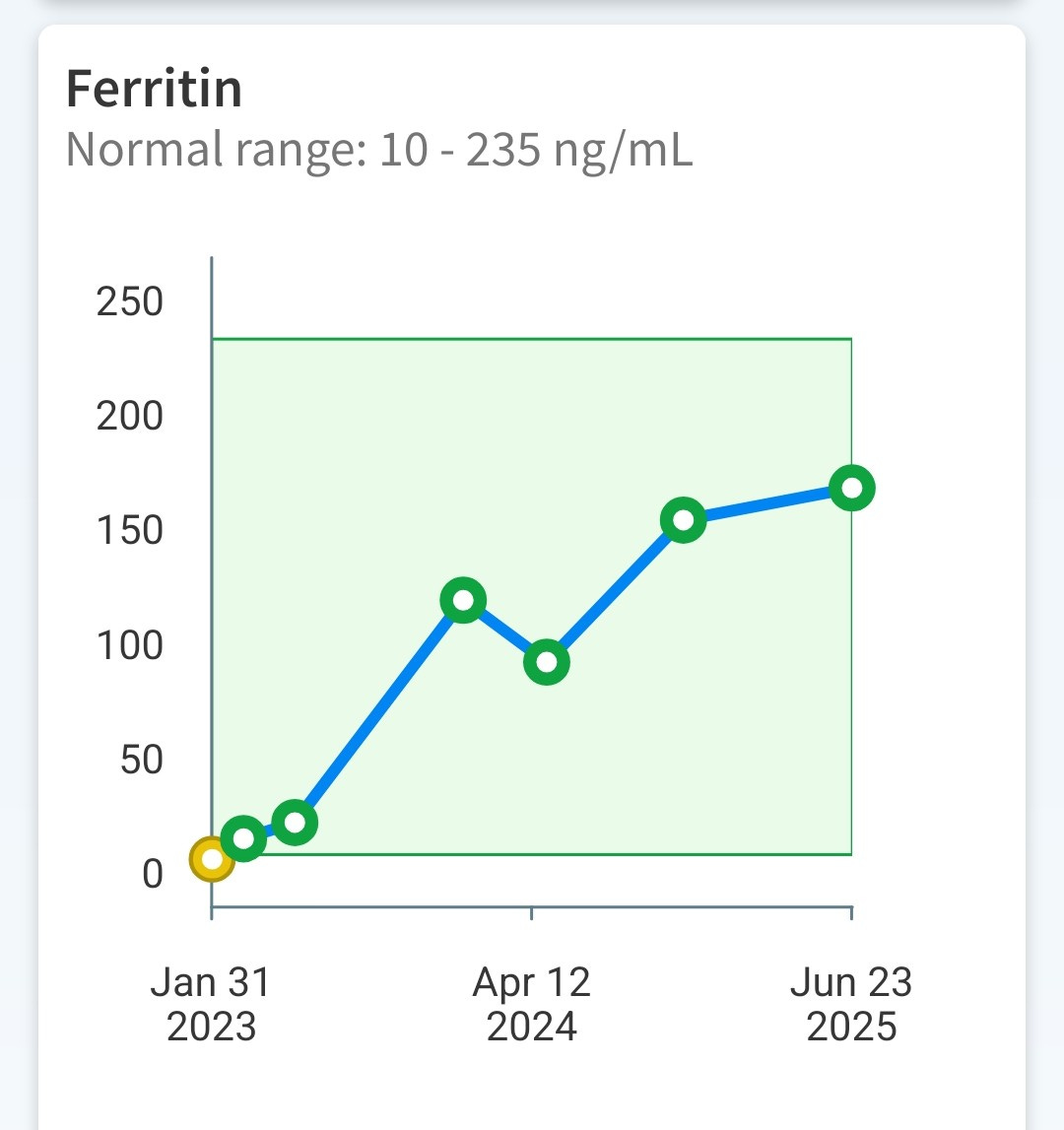
I got tested and found out I was in severe iron deficiency, my ferritin only 8ng/ml. This explained my symptoms, from heart palpitations, low energy, dizziness, restless legs, headaches, hair loss, to cold hands and feet and even tooth decay.
In this post, I want to spend some time defining terms and outlining what helped me get my iron levels back up.
What is iron?
Iron is a mineral essential to oxygenating our entire bodies, bringing them healthy growth patterns, energy, hormones, and immune function. However, the usual test for iron, hemoglobin, only looks at how much iron is circulating through your bloodstream at the present time; ferritin is the test for how much iron is stored in the body, and thus is more important for detecting deficiency. If your hemoglobin is low, you have anemia, however if your ferritin is low without anemia, most doctors will never see it.
Did you know that iron deficiency is the most common nutrient deficiency in the world? Yet I’m willing to bet most of us have never even heard of testing ferritin, much less had it done as a routine lab when you go in for low energy.
I happened to hear about ferritin from one of my sons’ doctors when we took him in for sleep issues years ago. The doctor explained that low ferritin could make you feel awful and give you restless legs, which interferes with sleep. Turns out, at that time my son’s ferritin was 8! Ironically, years later my ferritin was the same exact number when I went in for testing.
(Side note: I have a theory that somewhere in my family history of high sensitivity, there is something that may affect iron absorption, because several family members, spanning three generations, struggle with keeping our iron up, and we are all the sensitive ones.)
How does iron deficiency happen?
There are several causes, including more serious diagnoses, but for me, I think it was these 4 things:
Four pregnancies - depleting nutrients
Regular heavy periods when not pregnant - blood loss
Breastfeeding for extended time - more nutrient depletion
Running - burning through extra iron
Combined with no real iron supplementation, these things wrecked my iron stores. One pregnancy alone can cut your ferritin stores in half! Since I was only ever tested for hemoglobin, I had always felt secure that my iron was just fine, and only took extra iron when it was in my prenatal vitamins during pregnancy and for a short time while breastfeeding.
It is also not widely known that intense exercise like running depletes iron stores through microtears, sweat, and foot-strike hemolysis. In fact, studies have found that over half of all female runners are iron deficient! So the running I had grown to rely on for a mental break, endorphins, and challenge was depleting me as well.
How did I recover?
After finding out my ferritin was so low, I started taking iron supplements, but didn’t really have a plan. The recommendation on the bottle was one a day, and I felt hesitant to take too much, so I started slowly. I saw improvement in my heart palpitations, headaches and restless legs pretty quickly, but the fatigue stayed with me, and my ferritin was only increasing by a few points over two months. I needed more help if I didn’t want to be crawling to recovery.
I did more research and asked around online, then found more resources in a facebook group called The Iron Protocol and learned a better way to speed up my progress. This group has a ton of well-researched information and has an easy way to calculate how much iron you can take when you are trying to supplement. You can take up to 3mg of iron per kg of body weight, but it also matters what kind of iron you choose.
Summed up, here was my protocol:
100mg of heme iron a day
1000mg + of vitamin C
Daily copper supplement (copper is a cofactor to absorbing iron)
I found that heme iron is easier to absorb and has less restrictions (avoid dairy, caffeine, take only in the morning, etc.) and is easier to digest (less constipating) than non-heme supplements. I use the brand Three Arrows. I also had to find a liposomal vitamin C because high doses of vitamin C can give you stomach upset as well. It took several months to get my levels past 100 with supplements, but I did it!
Do you need to check ferritin?
If you have any suspicions that your energy is not where it should be and iron might be an issue, I urge you to get ferritin checked. It should be at least 125, and some of us who lived in deficiency for a long time feel better even up around 200. If you do get ferritin checked, be aware that lab ranges are not the same as ideal ranges. The low end of lab ranges is often as low as 10ng/ml, which is still iron deficiency! Just because a result is common does not mean it is ideal.
Iron is not the only thing that can wreck your health for sure, but it is an integral part of a healthy body that is easily tested and remedied with over-the-counter supplements. As a woman, and especially as a mom, it is important to keep an eye on it so you can function well.
I am happy to recommend more detailed protocol instructions and supplement brands I used - just drop a comment or send me a message.
If you are reading this, have you ever struggled with iron deficiency or anemia? I’d love to hear from you.
I’m currently struggling with iron deficiency anemia, with ferritin at 7 and hemoglobin 10.5. Your story is very encouraging as I am feeling weary from the current symptoms (restless legs, insomnia, dizziness etc. ) it’s good to hear that with the right protocol there’s hope. What are your thoughts on getting an iron infusion? Thank you for sharing your experience!